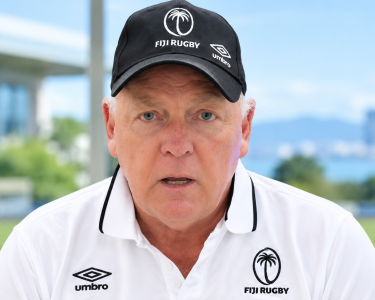
FIJI men’s 7s head coach Osea Kolinisau has once again placed his trust in a familiar core, naming a squad dominated by long-time regulars for this month’s HSBC SVNS Dubai 7s.
Of the 13 players selected, nine have been the backbone of the team from 2023 to 2025 — Terio Tamani, Waisea Nacuqu, Pilipo Bukayaro, Jeremaia Matana, Joseva Talacolo, Sevuloni Mocenacagi, George Bose, Vuiviwa Naduvalo and Ratu Manueli Nete Maisamoa.
It is a group with experience, chemistry and strong individual resumes. But it is also a group that has not quite delivered the results Fiji demands.
Fiji finished third overall in the 2023 series with 157 points, slipped significantly to sixth in 2024 with 80 points, and clawed its way back to second in 2025 with 96 points.
Those numbers are respectable by global standards but for Fiji, they fall short of the nation’s lofty expectations and its heritage of dominance in the abbreviated code.
Across those three seasons, the team has struggled to consistently produce the trademark flair, fearless creativity and high-tempo brilliance that once made the Fiji jersey a symbol of unpredictability and excitement.
Instead, performances have fluctuated, with flashes of brilliance overshadowed by stretches of mediocrity.
Which leads to the question many fans and rugby pundits are now quietly and not so quietly, asking:
Why is Kolinisau so reluctant to introduce new blood?
Fiji is a country that naturally breeds rugby players.
The local sevens scene is bursting with athletes who can step, offload and improvise at a level few nations can match.
Even the fifteens system churns out players who could seamlessly transition to the shorter format with proper pathways.
Yet since taking the reins, Kolinisau has made only minimal changes to his squad.
Besides a few additions to the development group, the inflow of raw talent into the main national team has been thin.
The depth is there, the competitions are vibrant, and the hunger from emerging players is undeniable but the opportunities remain limited.
For a coach who once embodied the very essence of Fijian sevens innovation, captaining Fiji to Olympic gold in 2016, his coaching selections appear surprisingly conservative.
He has yet to unveil a true marquee newcomer, someone cut from the cloth of a Serevi, Ryder, Kolinisau himself, or even a Tuwai in his early years.
Kolinisau’s loyalty to his core group may come from a desire for stability, trust and combinations forged over seasons.
But in the brutally competitive world of modern sevens, where every team is fitter, faster and more structured than before, evolution is not optional, it is necessary.
The question for Fiji now is whether holding firm to an ageing blueprint can deliver the return to glory that fans are craving. Or whether the time has come for Kolinisau to take bolder risks, open the door to new talent, and reshape a team that has shown promise but not yet lived up to its potential.
For a rugby nation overflowing with brilliance, the next step may not be about loyalty.
It may be about courage.
And Fiji has never lacked that.