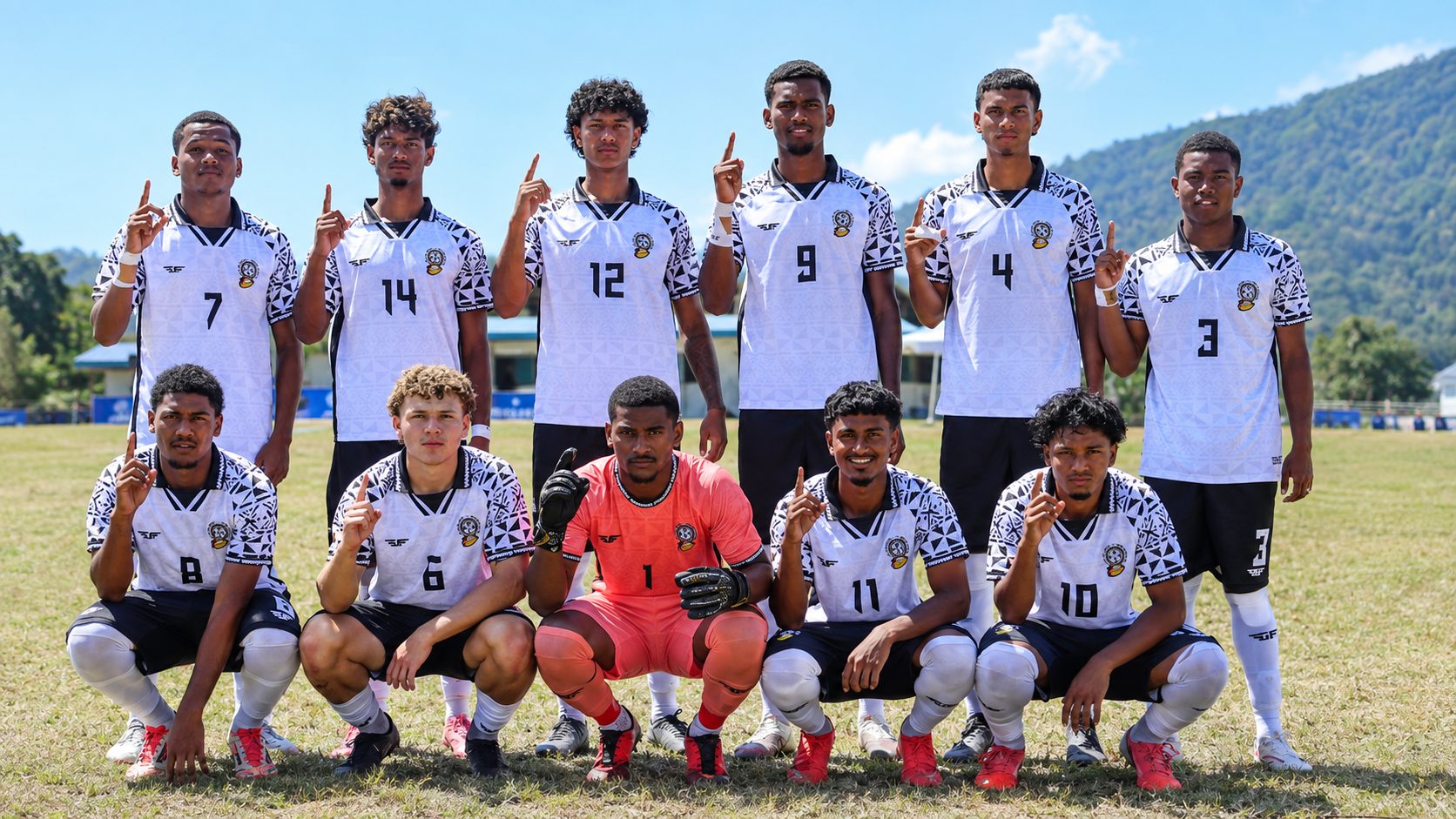

THE latest failure of Fiji’s Under-19 team to qualify for the FIFA U-20 World Cup 2027 raises some serious questions about football development in the country.
Fiji lost 2-1 to Tahiti in the OFC U-19 Men’s Championship, a draw would have qualified them for the tournament in Azerbaijan and Uzbekistan.
For years, we have heard claims about progress and a brighter future for Fiji football.
But progress cannot be measured by announcements alone; it must be seen on the football field.
The performance of our youth teams provides one of the clearest measures of whether the development system is actually working.
The U-19 age group is particularly important because these players are supposed to be the next generation of senior internationals.
They should be emerging from the development pathway with better technical ability, tactical understanding, fitness and confidence.
When results continue to expose the same weaknesses, it is reasonable to ask whether enough is being done at grassroots and youth level.
This is not about blaming young players.
They are the product of the system around them.
The responsibility lies with those who administer and oversee that system.
Fiji Football Association president Rajesh Patel has spoken highly about the progress and future of football under his leadership.
But leadership must ultimately be judged by outcomes.
Where are the improvements in youth development?
Where is the consistency from grassroots football to the national team?
Are our young players receiving the quality coaching, competition and facilities required to compete successfully against the best teams in Oceania?
This was possibly the best U19 team assembled, with four Bula FC players like, Maikah Dau, Ibraheem Afazal, Delon Shankar and Ryan Naresh alongside Nicholas Franklin and Abdullah Khairati, Fiji failed to qualify for the FIFA U-20 Men’s World Cup in 2027 in Azerbaijan and Uzbekistan.
Tahiti, New Zealand and other Pacific nations continue to demonstrate that investment in youth development must be long-term and measurable.
Fiji cannot expect different results while continuing with the same shortcomings.
A strong football nation is not built around a far-and-few appearance at the World Cup, it is built through consistency that produces quality players year after year.
The U-19 team’s struggles should therefore be treated not simply as another disappointing result, but as a warning.
Step up or get beat.