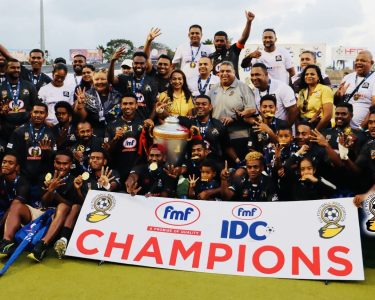

TEAM Canada FANCA team has won the hearts of those who believe the future of football in Canada is bright.
Canada’s 6–5 semifinal playoff loss to New Zealand was a scintillating contest, with 11 goals showcasing the potential within the Canadian side.
Despite the defeat, Canada showed that it can compete at this level.
But behind the performances on the field lies a much bigger issue.
Team Canada did not enter this FANCA tournament as a truly unified team.
Differences over player selection, special interests and financial incentives have been ongoing for many years, and they continue to affect the Canadian setup.
The biggest concern is the influence of individuals who appear to have vested interests in the team.
Some run club teams and seem to believe they should have the authority to select players from their own clubs to represent the nation.
That creates a difficult situation.
There are also instances where parents, whose children play football, become deeply involved in team administration.
Parents undoubtedly play a vital role in nurturing and supporting their children’s football development.
But being a supportive parent does not automatically mean having the knowledge or ability to manage a national team.
Running Team Canada requires more than good intentions.
It requires football knowledge, experience and, above all, neutrality.
In the early years of Team Canada, player selection was largely merit-based.
Open trials provided an opportunity for players to compete for a place on the national team, allowing ability and performance to determine selection rather than personal relationships, club affiliations or outside influence.
Coaches such as Musiab Talic, Nihad Krupic and Patrick Krishna Mohammed believed in fair selection, training and development.
That principle should not be lost.
If Canada is serious about building a successful national program, the focus must return to merit and unity.
Every talented player should have an equal opportunity to earn a place.
Selection should be conducted independently and without club, family or personal interests influencing decisions.
The talent is clearly there, it is just there needs to be people in positions who can identify and coach them to become the next best to represent in a team game.
The defeat to New Zealand showed that Canada can produce football capable of challenging the best teams in the FANCA competition.
What Canada also needs is to work on is unity ahead of the 2028 FANCA Nations World Cup, that they would host.
The championship may have slipped away, but the message is clear, the future football is bright, it is just the sports needs the right people who are willing to put the team before themselves.